
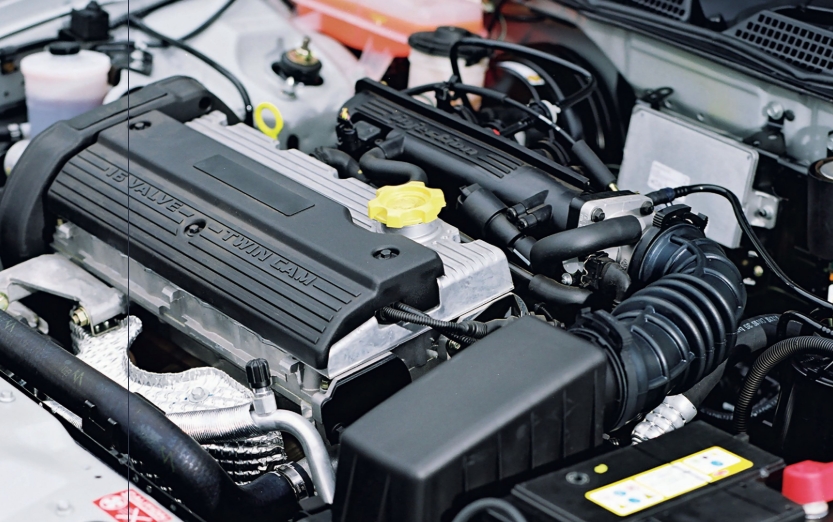
How to solve a problem like… Rover K-Series head gasket
Submitted by:
Think Rover K-Series, and the first things that come to mind are head gaskets. Unsuitable materials from new mean it’s not an unfair association, but Rover and the aftermarket have solved the issue, as Steffen Dobke from Lotus Elise specialist and restorer, analogue Automotive, tells us.
Where does the problem occur?
The head gasket, of course. But we can be more specific. It’s not usually between the cylinders, like most head gasket failures. Instead, the gasket usually fails between the coolant and oil paths. Steffen Dobke reiterates, ‘Nine times out of ten, when there’s an issue, it’s usually the original head gasket still there. As it’s going between the oil and water ways, it’s not going into the actual cylinders.’
Original gaskets don’t last very long. ‘The head gasket used to go usually under 40,000 miles. So, it's usually when the car was relatively new and relatively low mileage.’
Any car with a K-Series engine is susceptible, not just the aforementioned Series 1 Lotus Elise. The all-alloy wet-liner four-cylinder 16-valve non-turbocharged version is the one we’re focusing on. The engine came in a range of sizes from 1.4 to 1.6 and 1.8 litres. It came in the late Rover Metro and 100, the R8 and R3 generations of the Rover 200, 25 and Streetwise; the R8 and HH-R generations of the Rover 400 and 45; the Rover 75 and the first generation Land Rover Freelander. Naturally, it was also used by MG in its range of hot versions of the Rovers, the ZR, ZS and ZT.
It was also used to power the sporty MGF, Caterham used it in the Seven, and Lotus continued to use it in the early Series 2 Elise 111S and the Series 1 Exige in the K-Series’ most potent tune, the 179hp VHPD (Very High Performance Derivative).
Steffen has seen very early versions of the engine go on without any issues, but that’s very rare. ‘My experience is very much from the sports car and the Elises. But they're essentially the same road engine that came out and were used in MGs and Freelanders and all sorts. Weirdly enough, in the Elise's, I think they were slightly better in the Elise's, I don't know if it's because they had a better cooling system.’
What is the common fault?
When oil gets into the coolant, you can see it. ‘It’s like cappuccino in he header tank,’ says Steffen. ‘You’ll also see, maybe a spike in the engine temperatures as, obviously, the cooling system isn’t working optimally.’
Although rarer, K-Series head gaskets can let coolant into the cylinders. ‘The coolant will be crystal clear, but it will be dropping. It could be a bit grumbly when you first start it, too. I’ve seen that go on for years.’ Eventually, if it isn’t fixed, the results of this sort of issue are much more serious, ‘It can go catastrophically, with a big dump of coolant, and then it hydrolocks the engine.’
What causes the fault?
For the rare situations when coolant gets into the cylinders, that isn’t always the fault of the cylinders, says Steffen, ‘The cylinder liners can drop a little bit, and that will let it [coolant] in that way. That’s rare, but it does happen.’
The K-Series Achilles’ heel is the original design of the head gasket. ‘There were a couple of key flaws with them, the first of which they [Rover] openly admitted was the dowel system they had, a plastic dowel. Combined with a silicone gasket, which the early gaskets were. The original one was a flat piece of steel with some silicone stuck on the top, if you like. It just moved all over the place.’
The issue was exacerbated by other elements in the K-Series’ cooling system. 'It tends to not have the best thermostat in the world.’
How to fix the fault?
Metal dowels are, quite simply, the most significant way of fixing the K-Series’ head gasket issue. ‘Rover themselves later updated it. And this is not just aftermarket,’ says Steffen. ‘Whenever you order a head gasket kit now, it will come in metal dowels.’
Rover’s entire solution wasn’t ideal, though. ‘They came up with this MLS, the multi-layer steel gasket, to see if that helped it. I was never a big fan of that, it seems to just cause another problem and they tended to leak externally when they leaked.’
For the Elises he builds, very high-end, high-quality and very fast versions, Steffen goes beyond Rover’s head gasket fix. ‘The head gasket I use, it's a modern one. It’s a multi-layer, but not like the old multi-layer ones, all peened through with elastomers and stuff.’ It also goes onto a later, more rigid block with extra webbing in its casting, called an N-Series block.
‘The dowels we use are not rolled metal, they're proper like CNC steel or machine steel ones, they fit in there really nice and snugly.’
To help with the cooling system, Analogue Automotive’s Super Sport Elise also gets a different thermostat. ‘The later cars got a pressure relief thermostat, PRT. It’s a separate lower temperature thermostat that rerouted the coolant and kept the engine temperatures a lot happier. They’re what we fit to our engines.’
It also comes with a full engine rebuild. ‘The head goes off so it can get stripped out. It gets inspected and pressure tested, and machined so it's 100% flat. One of the things we do is check those liner heights so there are the correct protrusions so the gasket is sandwiched together nicely.’ That ensures the coolant-into-the-cylinder issue isn’t a problem, too.
There’s one simple way to make sure your K-Series head gasket isn’t a problem anymore – even in an engine that makes 210hp as Analogue Automotive’s versions do. ‘It's money,’ says Steffen. ‘A shed load of money, more than anyone would probably think is a sane thing to do for a K-Series. But, because of the direction we've gone with our build and the cost of the restoration… of everything else, it's warranted doing that.’
But it works. ‘Ours, today – touchwood – haven’t had any failures, particularly our head gaskets. We have tested one of them to destruction, and it did get destroyed, but it wasn't the head gasket.’