
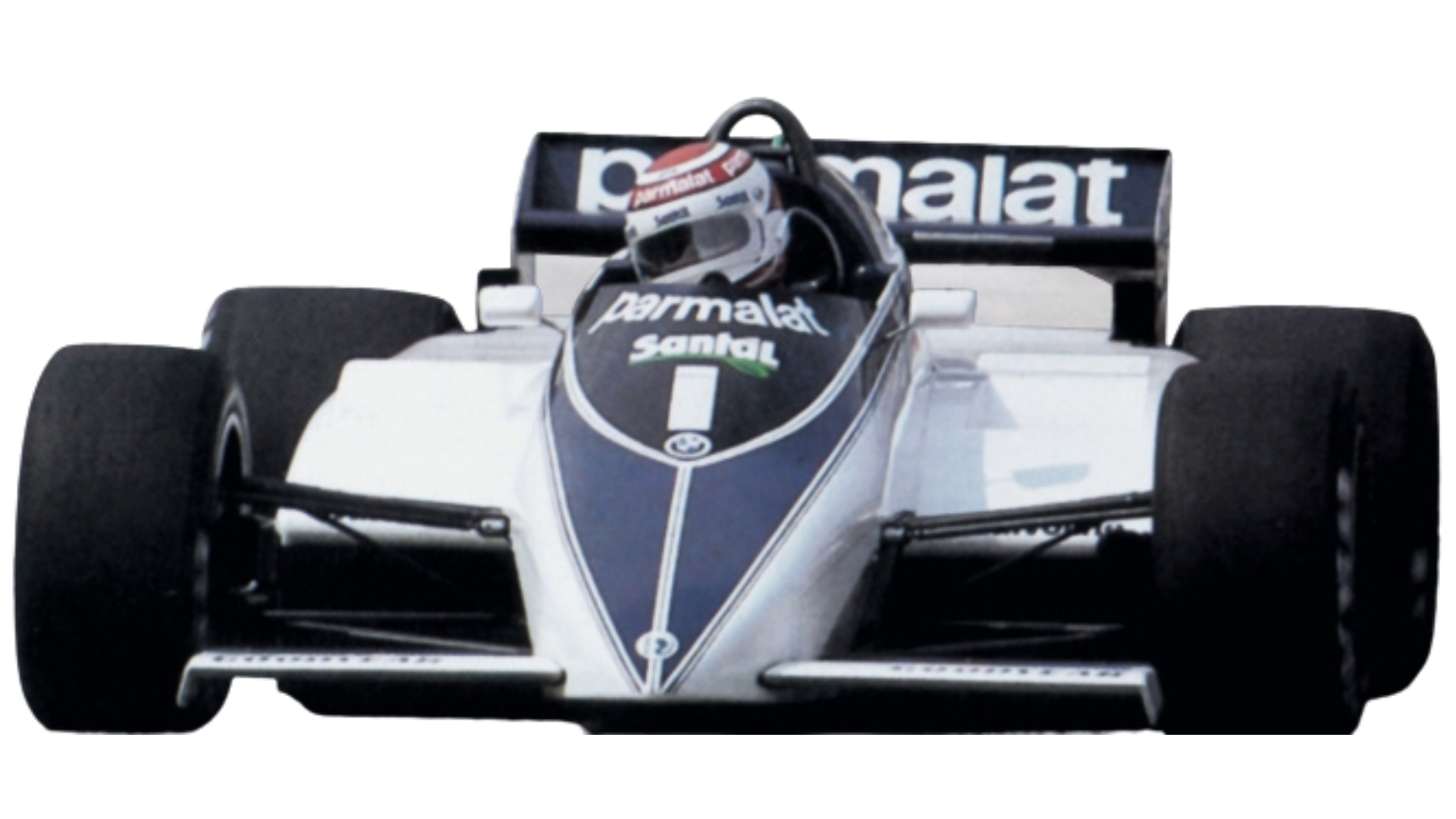
Brabham

If you ain’t cheating, you ain’t trying: Brabham BT52 super fuel

15th December 2025

Submitted by:

Will Beaumont

Developing a special blend of petrol from Wartime technology so your little four-cylinder can exceed your dyno limit. Welcome to BMW’s Eighties F1 engine strategy

As with any story about deception or misbehaviour, it gets romanticised. The truth isn’t documented at the time, it wouldn’t be wise to keep track of your cheating. Myths and legends take the place of truth. The fallacy that surrounds the fuel used in Brabham’s 1983 title-winning BT52 F1 car goes something like this: when the Brabham mechanics opened up their barrels of fuel in the Monaco paddock in 1983, the leaves on the trees above wilted and fell off. The fumes from the concoction that was fuelling the turbocharged 1400-plus-horsepower 1.5-litre BMW M12/13 engine were that pungent.

That seems unlikely, but it’s not that far from the truth. In an interview with Werke magazine, a high-quality BMW magazine, David North, a Brabham F1 engineer at the time, said of the fuel, ‘It was evil stuff and could make your nose bleed if you got too close’.

The fuel was just one way BMW Motorsport’s engine guru, Paul Rosche, extracted so much power from such a small capacity engine, as David explains. ‘Rosche’s team put in loads of development to every aspect of the engine’s design to improve power, reliability and drivability. Boost pressure got higher and higher, especially in qualifying specification. A major milestone was moving from Bosch Kugelfischer mechanical fuel injection to Bosch Motronic electronic fuel injection. Another big issue was fuel. BMW had links with BASF, who developed synthetic fuel in World War II, because Germany had limited access to oil wells. This was the basis of BMW’s fuel. It conformed to the octane level regulation, but permitted very high boost pressure without detonation.’

The results were phenomenal. The power from the M12/13 F1 engine was in the thousands. Exactly how much, though, no one knows. ‘It was definitely more than the dyno could handle, so the figures people quote are a bit questionable,’ says David. What isn’t in doubt is the speed of the car; Nelson Piquet won the 1982 World Championship. ‘Everything about the BT52 – seeing it, hearing it, and smelling it as it screamed down the road in qualifying, spouting flame and leaving a foggy wake of unburnt fuel… the whole thing was just awesome!’ remembers David.

The rest of the grid could see – and smell – that Brabham and BMW’s war juice was something different, something a bit special. Complaints were made to the officials, but as the fuel conformed to the FIA’s octane rating standards, the only test that was made of fuel at the time, so it was deemed legal. The late Charlie Whiting, who was Brabham’s chief mechanic at the time before he became the FIA’s Technical Delegate, has been quoted as saying the liquid was more than just the fuel they should have been using and ‘had far more exciting things in it.’ 

Before the rules changed to impose stricter limits on fuel, other F1 teams and their petrol partners went back to the lab to create their own concoctions. Elf and Agip started to supply their own brands of rocket fuel to Renault and Ferrari, respectively, and the era became known as that of the Super Fuel.